


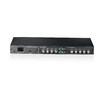













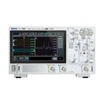





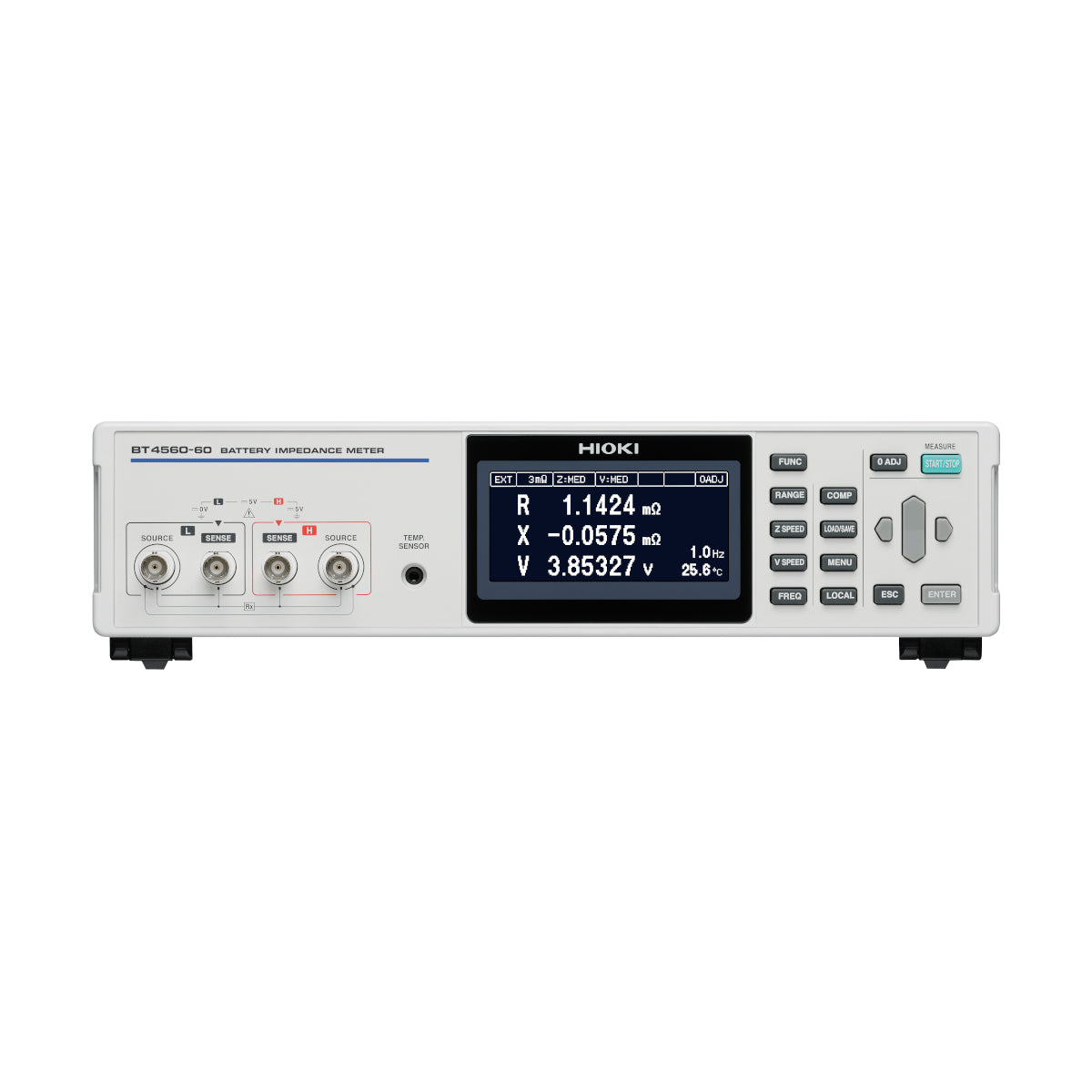
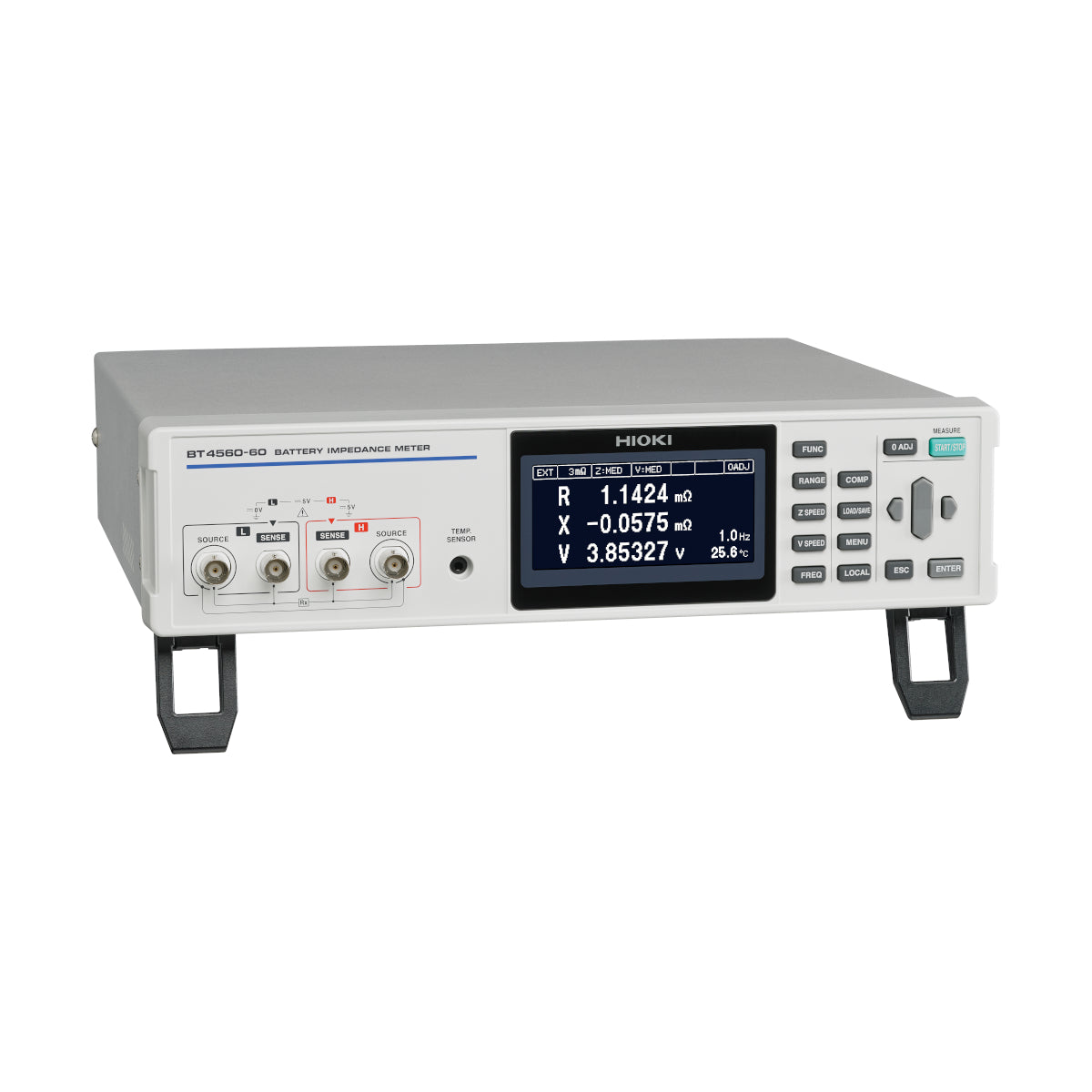
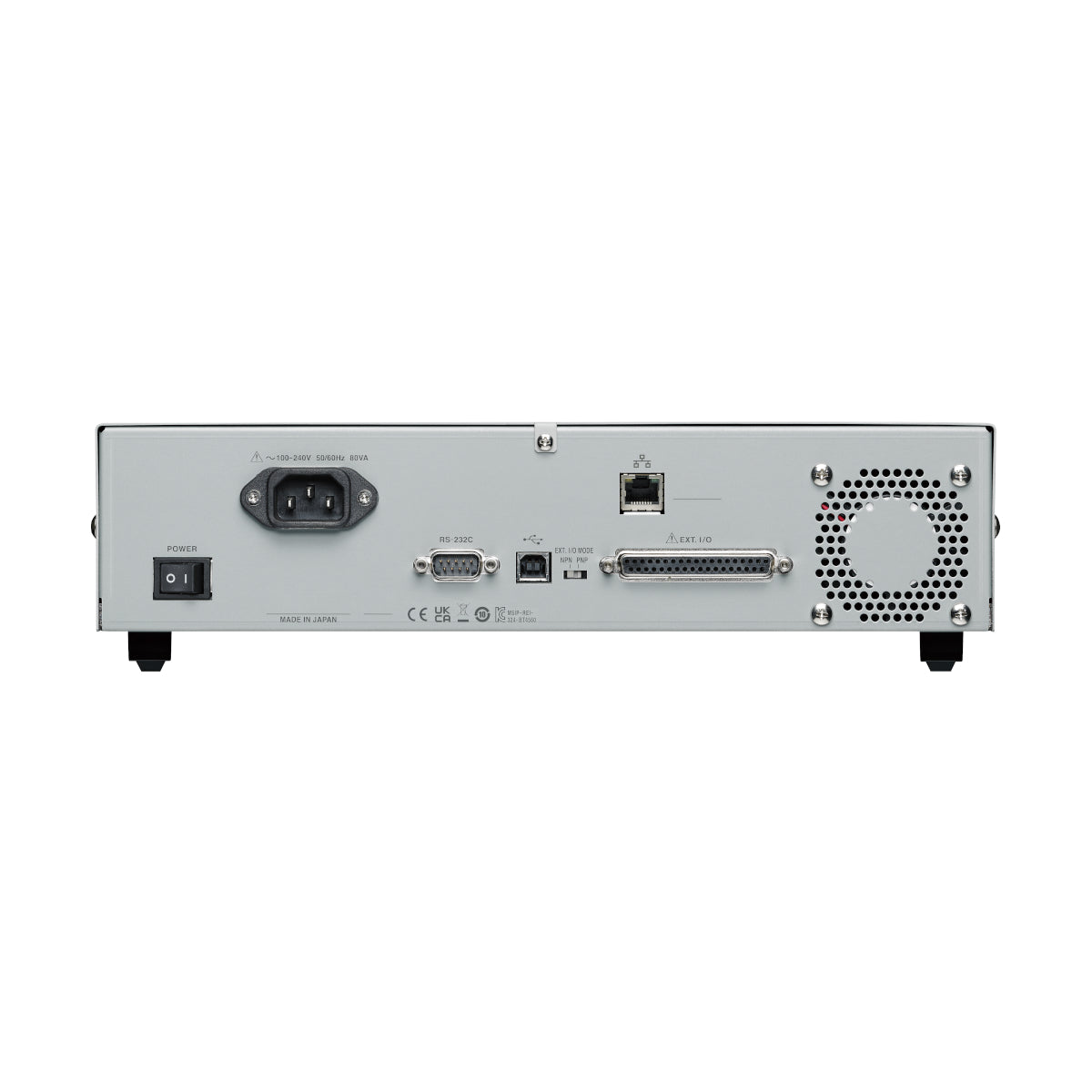
Hioki BT4560-60 Battery Impedance Meter
Använd vår chatt för personlig support. Eller kontakta oss via +46 73-202 00 59 eller sales@GOmeasure.se
- Reliable EIS measurements of high-capacity battery cells for EVs and ESSs
- EIS measurement frequency: 0.01 Hz to 10 kHz
- Simultaneous measurement of impedance, voltage, & temperature
- Convenient evaluation application software for R&D use
- Data compatibility with third-party equivalent circuit analysis software
- For production lines
- Scalability with the Switch Mainframe

Upptäck möjligheterna
Mer information
Beskrivning
The Battery Impedance Meter BT4560-60 can make EIS(*1) measurements quickly and easily in applications ranging from R&D to manufacturing. With its wide EIS measurement frequency range of 0.01 Hz to 10 kHz, the BT4560-60 is especially suited for battery cell design research and development.
By adding the Switch Mainframe SW1001 or SW1002, the system can be easily expanded into a multi-channel evaluation. This allows for automated and efficient high-precision EIS measurements of multiple batteries.
*1:Electrochemical Impedance Spectroscopy (EIS) is a type of testing that measures a battery's impedance across a broad frequency range using small AC signals. The technique, which yields detailed insights into characteristics such as a battery’s internal resistance and electrode reactions, aids in the understanding of battery behavior and performance, making it useful in R&D and quality control applications.
Key Features
- EIS measurement frequency: 0.01 Hz to 10 kHz
- Simultaneous measurement of impedance, voltage, & temperature
- Convenient evaluation application software for R&D use
- Data compatibility with third-party equivalent circuit analysis software
- For production lines
- Scalability with the Switch Mainframe
A reliable EIS measuring instrument for applications ranging from R&D to manufacturing
Manage Charge Transfer Resistance (Rct), Electrolyte Resistance (Rel), and Diffusion Resistance to improve the quality of battery cell inspections
- Set your own measurement frequency between 0.01 Hz and 10 kHz
- Use low frequencies to measure charge transfer resistance and diffusion resistance
- Use high frequencies to measure electrolyte resistance and welding resistance
- Create Nyquist (Cole-Cole) plots with bundled application program
- Use equivalent circuit analytic software to analyze internal battery defects
Create Nyquist plots instantly
Nyquist plots (Cole-Cole) of Lithium-Ion batteries can provide invaluable insights into the battery chemistry and aid in research and development. This type of analysis has often been complicated, time-consuming, and expensive.
Using Hioki's BT4560-60 Battery Impedance Analyzer connected to your PC, you can perform a frequency sweep quickly and easily, with the results plotted in real-time.
Measure very low impedances of 1mΩ or less
Some high-capacity Li-ion batteries have an internal impedance less than 1 mΩ.
The BT4560-60 is designed to measure very low impedances of 1 mΩ or less with high stability and reproducibility.
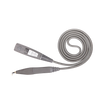
Dedicated probes for four-terminal pair measurement reduce the magnetic flux generated
Probes with a four-terminal pair structure provide very stable measurement that is less affected by environmental noise or cabling.
Dokument
Alternativ
Video
The Battery Impedance Meter BT4560-60 can make EIS(*1) measurements quickly and easily in applications ranging from R&D to manufacturing. With its wide EIS measurement frequency range of 0.01 Hz to 10 kHz, the BT4560-60 is especially suited for battery cell design research and development.
By adding the Switch Mainframe SW1001 or SW1002, the system can be easily expanded into a multi-channel evaluation. This allows for automated and efficient high-precision EIS measurements of multiple batteries.
*1:Electrochemical Impedance Spectroscopy (EIS) is a type of testing that measures a battery's impedance across a broad frequency range using small AC signals. The technique, which yields detailed insights into characteristics such as a battery’s internal resistance and electrode reactions, aids in the understanding of battery behavior and performance, making it useful in R&D and quality control applications.
Key Features
- EIS measurement frequency: 0.01 Hz to 10 kHz
- Simultaneous measurement of impedance, voltage, & temperature
- Convenient evaluation application software for R&D use
- Data compatibility with third-party equivalent circuit analysis software
- For production lines
- Scalability with the Switch Mainframe
A reliable EIS measuring instrument for applications ranging from R&D to manufacturing
Manage Charge Transfer Resistance (Rct), Electrolyte Resistance (Rel), and Diffusion Resistance to improve the quality of battery cell inspections
- Set your own measurement frequency between 0.01 Hz and 10 kHz
- Use low frequencies to measure charge transfer resistance and diffusion resistance
- Use high frequencies to measure electrolyte resistance and welding resistance
- Create Nyquist (Cole-Cole) plots with bundled application program
- Use equivalent circuit analytic software to analyze internal battery defects
Create Nyquist plots instantly
Nyquist plots (Cole-Cole) of Lithium-Ion batteries can provide invaluable insights into the battery chemistry and aid in research and development. This type of analysis has often been complicated, time-consuming, and expensive.
Using Hioki's BT4560-60 Battery Impedance Analyzer connected to your PC, you can perform a frequency sweep quickly and easily, with the results plotted in real-time.
Measure very low impedances of 1mΩ or less
Some high-capacity Li-ion batteries have an internal impedance less than 1 mΩ.
The BT4560-60 is designed to measure very low impedances of 1 mΩ or less with high stability and reproducibility.
Dedicated probes for four-terminal pair measurement reduce the magnetic flux generated
Probes with a four-terminal pair structure provide very stable measurement that is less affected by environmental noise or cabling.