


















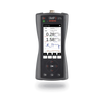



Svantek SV 100A Whole-Body Vibration Dosimeter
Använd vår chatt för personlig support. Eller kontakta oss via +46 73-202 00 59 eller sales@GOmeasure.se
- Number of channels: 3
- Communication Interfaces: USB, Bluetooth
- Display: Yes
- Keyboard: 4 buttons
- Memory: 8 GB
- Battery type: Ni-MH
- Operating time: 24 h
- Operating temperature range: -10 °C to 50 °C
- Humidity range: up to 90 % RH, non-condensed
- Weight: 500 grams
- Size: 235mm x 12 mm

Upptäck möjligheterna
Mer information
Beskrivning
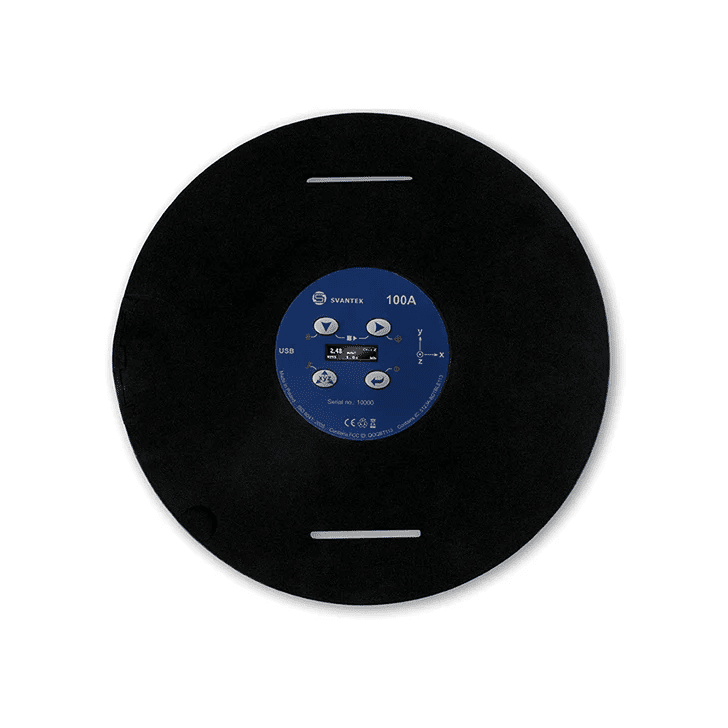
The SV 100A is a wireless whole-body vibration meter designed for seat and backrest measurements in accordance with ISO 2631-1 and ISO 2631-5. It integrates a triaxial MEMS accelerometer and force sensors that detect operator presence, ensuring that vibration exposure is only calculated during actual contact with the vibrating surface. The instrument enables reliable A(8) exposure assessment using both RMS and VDV metrics. Equipped with an OLED display, 8 GB memory and up to 24 hours of battery life, the SV 100A supports time-history logging, optional frequency analysis in 1/1 and 1/3 octaves, and time-domain signal recording for transient shock analysis. Configuration is available both on-device and remotely via the Assistant mobile app or Supervisor software, with optional GPS and speed data overlay to support advanced diagnostics and vibration source identification.
Highlights
- SV 100A is a Personal Vibration Exposure Meter (PVEM): that enables full-day whole-body vibration monitoring without disrupting normal work activities, in compliance with ISO 8041-2:2021.
- The instrument supports accurate daily exposure assessment A(8): in RMS, VDV, and Points, compliant with ISO 2631-1, ISO 2631-5, and Directive 2002/44/EC.
- An integrated Operator Detection System (ODS): uses force sensors to detect user presence and eliminate invalid data when the seat is unoccupied.
- The triaxial MEMS accelerometer: covers low-frequency ranges starting at 0.1 Hz, allowing motion sickness evaluation per ISO 2631-1 and high-resolution vibration analysis.
- Real-time 1/1 and 1/3 octave frequency analysis and waveform recording: (options) help identify dominant frequencies and transient shocks.
- Wireless Bluetooth®: communication with the Assistant app enables live data viewing, remote control, GPS tagging, and vibration source mapping.
- With 8 GB internal memory and up to 24 hours of operation: SV 100A is ideal for continuous, unattended occupational exposure monitoring.
Practical Features in Use
Automatic presence detection
Built-in force sensors detect driver's presence
The information from built-in force sensors in the SV 100A is recorded together with triaxial vibration data for automatic indication of the real exposure time for the calculation of the A(8) vibration exposure. The sensitivity of force sensors can be adjusted in the SV100A firmware.

ISO 2631-1 and EU Vibration Directive
A(8) and vibration total value awv
The SV 100A measures the A(8) vibration exposure and the overall vibration total value (VECTOR) in accordance with ISO 2631-1 and EU Vibration Directive. The A(8) result is given in: m/s2 (RMS), m/s1.75 (VDV) and Points. The SV 100A monitors the time left to limits and activates the alarm when the limits are reached.

Assistant application and GPS
smartphone app for whole-body vibration
The SV100A Whole-Body Vibration Dosimeter wireless BT interface enables current results to be previewed on a smart-phone or tablet using our Assistant application. The smart-phone application also signals an alarm when the set vibration limits are exceeded. The Assistant enables correlation of GPS data with the vibration data and plots them on a map. This solution gives a powerful tool for projecting the A(8) vibration exposure with respect to the vehicle speed and road conditions.

Motion sickness
vibrations with frequencies below 0.5 Hz
Vibrations with frequencies below 0.5 Hz cause so called motion sickness, primarily in the standing and sitting postures. This type of vibrations are typical for ships and other sea vessels. The most recognized symptoms of motion sickness are dizziness and vomiting. The SV 100A is capable to measure vibration frequencies from 0.1 Hz which makes it suitable for motion sickness measurements in accordance to ISO 2631-1. The low frequency vibrations are measured in vertical axis with Wf weighting filter.

Applications
Whole-body vibration
measurements on the seat and seat-back
The SV 100A measures the A(8) vibration exposure and the overall vibration total value (VECTOR) in accordance with ISO 2631-1 and EU Vibration Directive. The A(8) result is given in: m/s2 (RMS), m/s1.75 (VDV) and Points. The SV 100A monitors the time left to limits and activates the alarm when the limits are reached. When changing the orientation of the SV 100A to the vertical, the directions of axes and weighting filters are automatically adjusted in accordance to ISO 2631-1.

Alternativ
Video
Check out this video showcasing our range of vibration level meters, perfect for hand-arm and whole-body vibration measurements, as well as vibration exposure and vibration risk assessment.
The SV 100A is a wireless whole-body vibration meter designed for seat and backrest measurements in accordance with ISO 2631-1 and ISO 2631-5. It integrates a triaxial MEMS accelerometer and force sensors that detect operator presence, ensuring that vibration exposure is only calculated during actual contact with the vibrating surface. The instrument enables reliable A(8) exposure assessment using both RMS and VDV metrics. Equipped with an OLED display, 8 GB memory and up to 24 hours of battery life, the SV 100A supports time-history logging, optional frequency analysis in 1/1 and 1/3 octaves, and time-domain signal recording for transient shock analysis. Configuration is available both on-device and remotely via the Assistant mobile app or Supervisor software, with optional GPS and speed data overlay to support advanced diagnostics and vibration source identification.
Highlights
- SV 100A is a Personal Vibration Exposure Meter (PVEM): that enables full-day whole-body vibration monitoring without disrupting normal work activities, in compliance with ISO 8041-2:2021.
- The instrument supports accurate daily exposure assessment A(8): in RMS, VDV, and Points, compliant with ISO 2631-1, ISO 2631-5, and Directive 2002/44/EC.
- An integrated Operator Detection System (ODS): uses force sensors to detect user presence and eliminate invalid data when the seat is unoccupied.
- The triaxial MEMS accelerometer: covers low-frequency ranges starting at 0.1 Hz, allowing motion sickness evaluation per ISO 2631-1 and high-resolution vibration analysis.
- Real-time 1/1 and 1/3 octave frequency analysis and waveform recording: (options) help identify dominant frequencies and transient shocks.
- Wireless Bluetooth®: communication with the Assistant app enables live data viewing, remote control, GPS tagging, and vibration source mapping.
- With 8 GB internal memory and up to 24 hours of operation: SV 100A is ideal for continuous, unattended occupational exposure monitoring.
Practical Features in Use
Automatic presence detection
Built-in force sensors detect driver's presence
The information from built-in force sensors in the SV 100A is recorded together with triaxial vibration data for automatic indication of the real exposure time for the calculation of the A(8) vibration exposure. The sensitivity of force sensors can be adjusted in the SV100A firmware.
ISO 2631-1 and EU Vibration Directive
A(8) and vibration total value awv
The SV 100A measures the A(8) vibration exposure and the overall vibration total value (VECTOR) in accordance with ISO 2631-1 and EU Vibration Directive. The A(8) result is given in: m/s2 (RMS), m/s1.75 (VDV) and Points. The SV 100A monitors the time left to limits and activates the alarm when the limits are reached.
Assistant application and GPS
smartphone app for whole-body vibration
The SV100A Whole-Body Vibration Dosimeter wireless BT interface enables current results to be previewed on a smart-phone or tablet using our Assistant application. The smart-phone application also signals an alarm when the set vibration limits are exceeded. The Assistant enables correlation of GPS data with the vibration data and plots them on a map. This solution gives a powerful tool for projecting the A(8) vibration exposure with respect to the vehicle speed and road conditions.
Motion sickness
vibrations with frequencies below 0.5 Hz
Vibrations with frequencies below 0.5 Hz cause so called motion sickness, primarily in the standing and sitting postures. This type of vibrations are typical for ships and other sea vessels. The most recognized symptoms of motion sickness are dizziness and vomiting. The SV 100A is capable to measure vibration frequencies from 0.1 Hz which makes it suitable for motion sickness measurements in accordance to ISO 2631-1. The low frequency vibrations are measured in vertical axis with Wf weighting filter.
Applications
Whole-body vibration
measurements on the seat and seat-back
The SV 100A measures the A(8) vibration exposure and the overall vibration total value (VECTOR) in accordance with ISO 2631-1 and EU Vibration Directive. The A(8) result is given in: m/s2 (RMS), m/s1.75 (VDV) and Points. The SV 100A monitors the time left to limits and activates the alarm when the limits are reached. When changing the orientation of the SV 100A to the vertical, the directions of axes and weighting filters are automatically adjusted in accordance to ISO 2631-1.
Check out this video showcasing our range of vibration level meters, perfect for hand-arm and whole-body vibration measurements, as well as vibration exposure and vibration risk assessment.